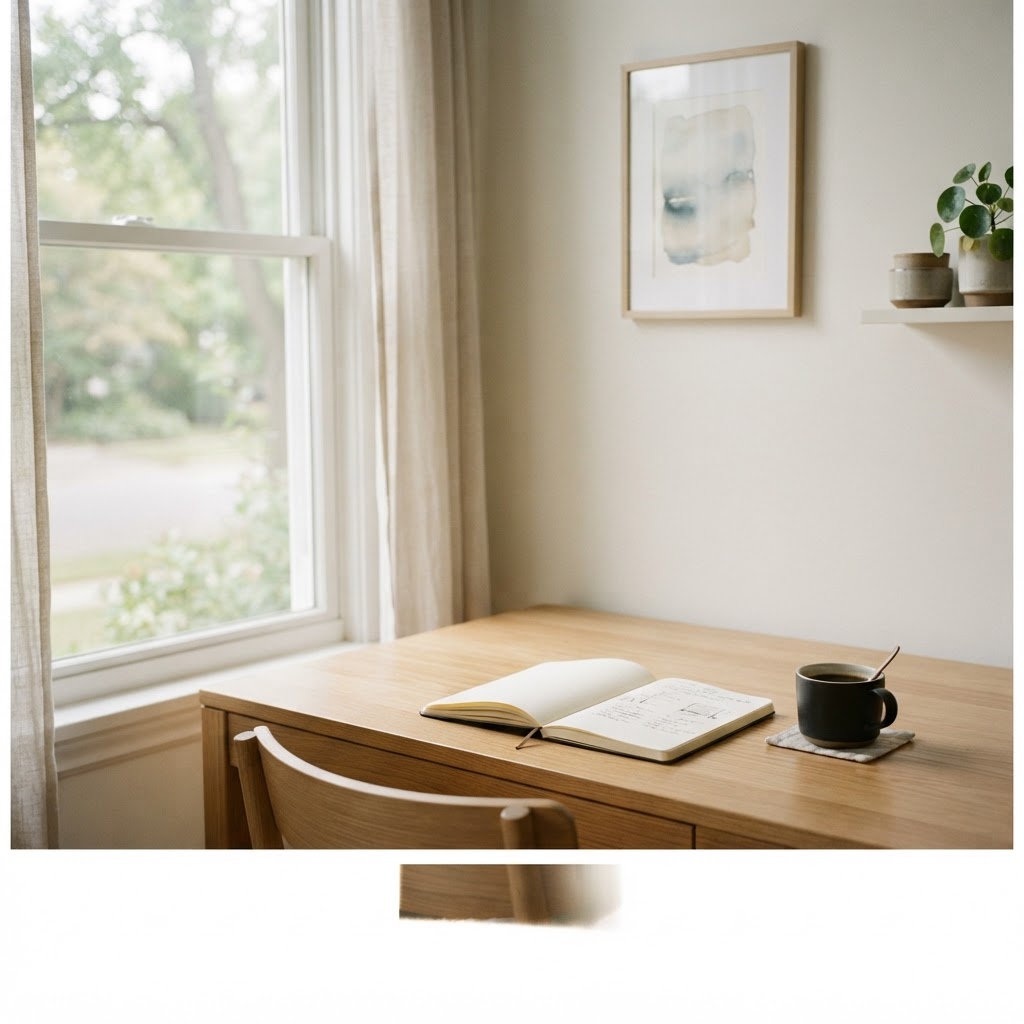
AI-generated illustration of a notebook and quiet workspace. It is not a prescribed environment or a promised result.
You have to put a personal project aside. Perhaps the weekend is over, a family responsibility needs attention, or the work simply needs to wait. Before closing everything, leave a few sentences for the person who will return to it: you, with less of today's context in mind.
A restart note is a small planning exercise. It does not require a new app, a perfect schedule or a commitment to finish the project. Its job is to preserve enough information to make your next choice clearer.
Describe where the work stands
Write down what you actually completed and where the current materials live. Be specific enough that you can identify the right version. “Selected twelve photographs in the folder named Family Album Draft” is easier to use than “worked on the album.”
Keep the note with the project if that is a suitable place for it. Avoid placing private family details or account information in a shared task list merely because the list is convenient.
Name the unfinished question
A next step may depend on an answer rather than more effort. Perhaps you need to ask which photograph a relative prefers, check a measurement, or choose between two formats. Record that uncertainty instead of writing “finish everything.”
In the imaginary album example, the note might say: “The opening page is undecided; ask whether the reunion photograph belongs first.” That preserves a decision to discuss, without pretending it has already been made.
Leave one action small enough to recognize
Choose a concrete starting action: open the selected folder, read the last paragraph, lay out the two samples, or check the missing measurement. The action can be brief without becoming a rule about how long every session must last.
Make it conditional if necessary. “If the photographs arrive, choose the opening pair; otherwise, label the existing selections.” This gives you an option without inventing work just to keep a streak alive.
Include what you should not repeat
If you already checked something, leave a short reference to the result. Note which version you set aside and why. You do not need a full history; one sentence can prevent you from mistaking an abandoned draft for the current one.
Keep conclusions tentative where appropriate. “This layout was difficult to read at the size I tried” is more informative than “this layout is bad.” You may revisit it under different conditions.
Return with permission to reconsider
When you come back, read the note before accepting its next step. Does the project still matter? Are the materials available? Has another commitment changed what is realistic? You can continue, revise the plan, or leave it paused.
The note is context, not an instruction from your past self that you must obey. If you decide to stop, record that choice and put the materials somewhere appropriate. A paused project does not automatically create a debt of time.
Keep the note smaller than the project
Try four lines: where I stopped; what is unresolved; where the materials are; what I could do next. Add only what would help you return. If maintaining the note becomes a project of its own, simplify it.
For the broader coaching and education approach, explore the Reprogram Method. This restart exercise is editorial planning advice, not a clinical explanation of exhaustion or a guarantee of lasting change.