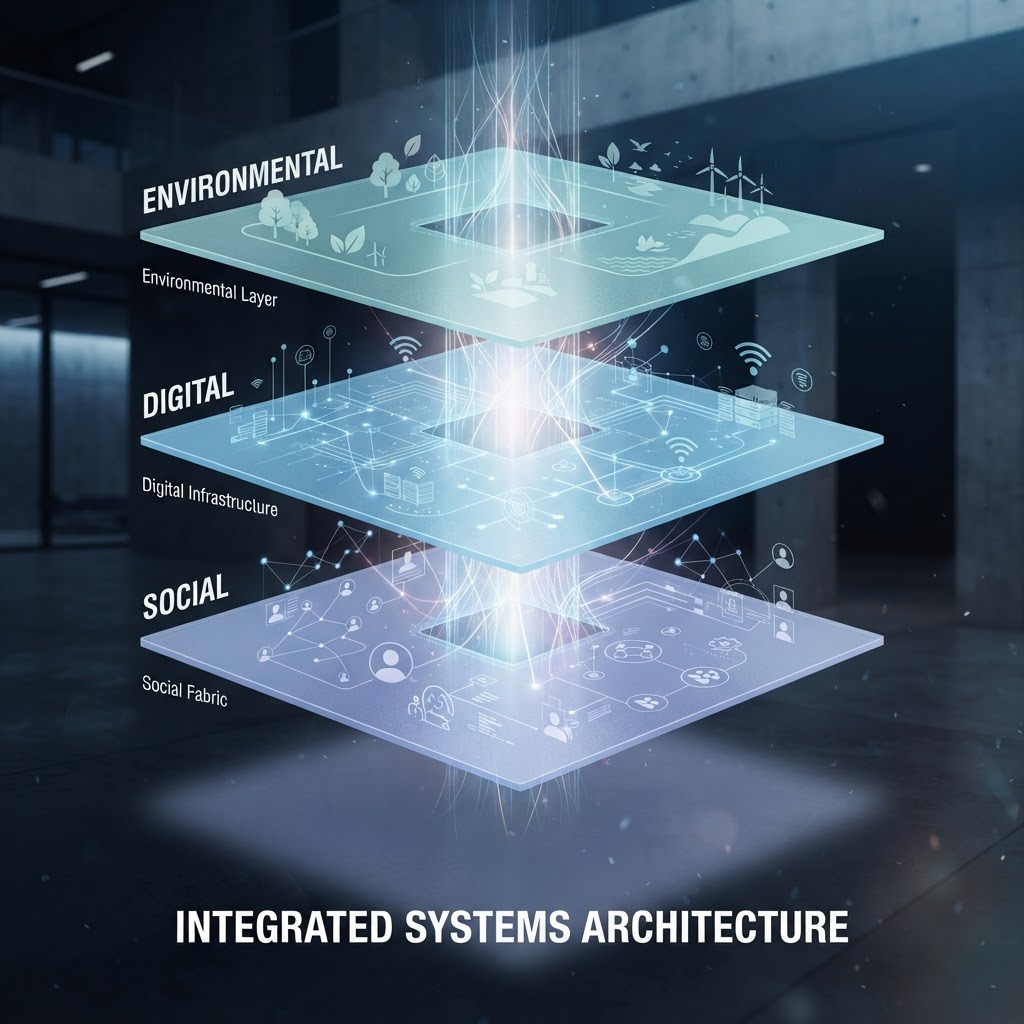
The Life Design Stack: Engineering Automated Consistency
Most attempts at personal change fail not because of a lack of desire, but because of a flawed delivery mechanism. We are taught to rely on motivation and willpower, treating them as inexhaustible fuels. In reality, willpower is a finite biological resource. When you are stressed, fatigued, or overwhelmed, that resource depletes, and you inevitably revert to your factory settings: the automatic routines that have governed your life for years. According to the Reprogram Method, the key to lasting transformation is not trying harder, but building a system that makes the desired behavior the path of least resistance.
The Problem with the Willpower-First Model
If you have ever started a new habit only to abandon it three weeks later, you have experienced the willpower gap. Relying on sheer determination for long-term change is statistically likely to fail because life is unpredictable. Your internal resolve is constantly competing with external stressors. This is why systemic change is superior to motivational spikes. By moving from vague dissatisfaction to clear, systematic choices, you can begin to reprogram your life using a framework that doesn't require you to be at your best 100% of the time.
The Reprogram Method: A Five-Step Protocol
Before building your 'stack,' you must understand the underlying protocol for change. The Reprogram Method involves five distinct stages: Audit, Debug, Rewrite, Automate, and Review. This process transitions you from passive observation to active engineering. You start with a life audit to identify where your energy is actually going, debug the bottlenecks, rewrite the rules of your daily operation, automate the implementation, and review the results for continuous improvement.
Level 1: The Environmental Layer (Physical Architecture)
The first layer of your Life Design Stack is your physical environment. This is often referred to as 'choice architecture.' If your environment is designed to trigger old habits, you will continue to perform them regardless of your goals. To build a robust environmental layer, you must curate your space to provide visual cues for new behaviors while adding friction to old ones. This is the foundation of the Automate phase of the Reprogram Method. By changing your surroundings, you reduce the cognitive load of decision-making. You aren't deciding to work out; your gym clothes are already laid out in your path.
Level 2: The Digital Layer (Systemic Outsourcing)
In a modern context, your digital infrastructure is just as important as your physical one. This layer involves using calendars, task managers, and AI to act as an external hard drive for your intentions. Instead of keeping your 'to-do' list in your head—which creates constant low-level anxiety—you move it into a system. For entrepreneurs, this is critical for 'Founder Freedom.' By identifying 'energy leaks' and shifting from reactive tasks to intentional systems, you reclaim the mental bandwidth necessary for high-level strategy. The goal of the digital layer is to ensure that you never have to ask, 'What should I be doing right now?' The system has already answered that question for you.
Level 3: The Social and Accountability Layer
Human beings are social creatures, and our behavior is heavily influenced by the expectations of others. The final layer of the stack is social automation. This involves building external checkpoints—whether through professional coaching, peer groups, or public commitments—that provide a safety net when the physical and digital layers are tested. This layer ensures that even when your internal motivation is at zero, the 'social cost' of inaction keeps you moving forward. It is the final fail-safe in the Life Design Stack.
Founder Freedom and the Elimination of Energy Leaks
For founders and high-performers, the stack is not just about productivity; it is about survival. The 'Founder Freedom' track within the Reprogram Method specifically targets the 'energy leaks' that occur when a leader is stuck in the weeds of their own life. By applying the stack, you move from being a reactive participant in your business to an intentional architect of your time. This involves a systematic shift: identifying the tasks that drain you and creating automated protocols to handle them, allowing you to focus on the 'Perfect Ordinary Day' that fuels both your business and your humanity.
A Note on Reality: The Timeline of Change
While the concept of a 'stack' sounds instantaneous, the biology of the brain is not. Neuroplasticity—the process by which the brain forms new 'natural' patterns—can take weeks or even months. Understanding that immediate logic does not always equal immediate behavioral ease is vital. The stack is designed to support you during this transition period. It is also important to note that the Reprogram Method is a coaching and systems-design framework, not a substitute for professional clinical care or psychotherapy. It is about engineering your environment, not treating clinical conditions.
Implementing Your 30-Day Action Plan
Building the full stack all at once can be overwhelming. The most effective approach is to identify a primary bottleneck. A 90-minute 'Life Reset' session is often the most efficient way to pinpoint this bottleneck and generate a practical 30-day action plan. By focusing on one layer of the stack at a time, you build momentum without triggering the burnout that comes from rigid optimization. Remember: change the system, but keep your humanity. The goal is a life that works for you, not a life where you are a slave to a new set of rigid rules.
Stop running the program that built your old life. Start building the stack that will sustain your new one. Explore the tools and systems needed to reclaim your time and energy at reprogramyourlife.cloud.