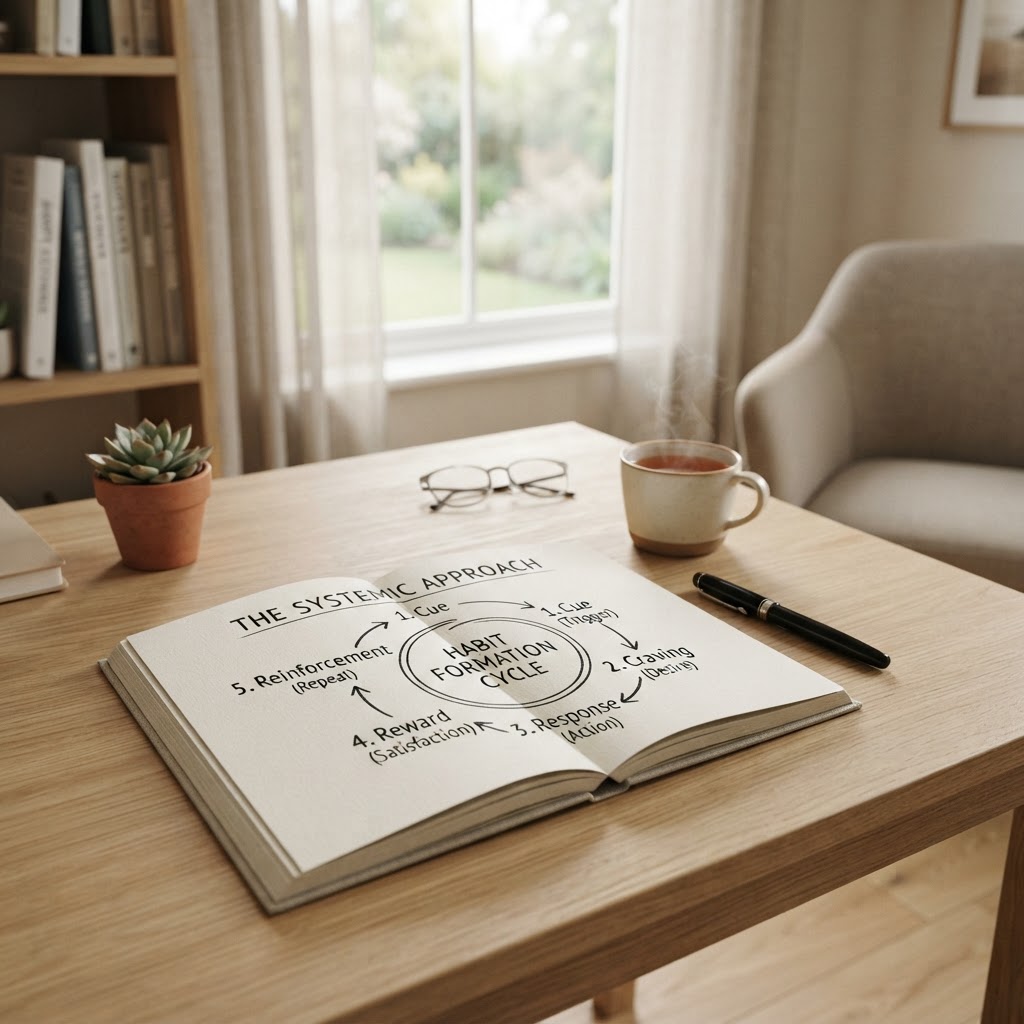
A reminder on the fridge, a calendar alert, and a note beside the laptop may all be asking for the same thing. Before adding a fourth, look at what each one is actually asking you to do.
This is a practical exercise for reviewing habit reminders around one routine. It does not explain every difficulty with motivation or promise that a different cue will create a lasting habit.
Choose one reminder to inspect
Pick a reminder for a low-stakes activity you still want to do, such as reviewing a personal reading list. Leave reminders for medication, safety procedures, caregiving or other essential responsibilities outside this exercise; those need their own appropriate arrangements.
Write down where the reminder appears, when you encounter it, and the exact action it names. “Read more” and “choose a chapter for tonight” ask for different kinds of decisions.
Check whether you can act at that moment
Imagine following the reminder immediately. Do you have the materials, time and permission you need? If the alert appears while you are driving or using a shared device for another purpose, its timing may not fit the action.
Do not assume that noticing a reminder means you are available to act. You might need to move it to a more suitable point, change the action it asks for, or use it only to make a later plan. Choose the option that fits your circumstances.
Make the requested action recognizable
A reminder can become a label for an entire ambition. Try describing a beginning that you could actually recognize. In the reading example, “open the saved reading list and choose one item” is clearer than “become a better reader.”
This is an editorial example, not a prescribed routine. If choosing an item is already easy and finding time is the real difficulty, clearer wording alone will not solve that problem.
Look for competing versions
Check whether another note or alert gives different instructions. An old calendar entry might point to a time you no longer use, while the paper note describes a newer plan. Decide which version reflects your current intention before changing anything.
For the low-stakes routine you selected, you may choose one agreed reminder and set aside an obsolete duplicate. Do not remove a shared reminder without checking with the people who rely on it. Keep essential responsibilities separate from an experiment in tidiness.
Observe what the reminder does
Over the next few relevant occasions, note whether you noticed it, understood it, and could act. These are separate questions. A visible note may be clear while the needed material is elsewhere; a well-timed alert may still describe something you no longer want to prioritize.
Use those observations to keep, revise or remove this particular reminder. You are assessing an arrangement, not assigning yourself a discipline score. There is no required streak and no reason to multiply alerts just to make the plan look more serious.
Connect the cue to the larger plan
The Reprogram Method describes examining patterns and constraints, choosing practical changes, using supports such as calendars and environmental design, and reviewing what happens. This reminder exercise is one possible planning activity alongside that approach, not an official clinical protocol or a guaranteed habit intervention.
Explore the Reprogram Method for its broader coaching and education framework.